
Sweet Itch in Horses: How to Break the Mane, Belly, and Tail-Rubbing Cycle
If your horse is rubbing the mane into the fence, chewing at the belly, or destroying hair at the top of the tail, do not write it off as just buggy. In summer, that pattern often points to sweet itch: an allergic skin reaction to biting insects that can become a self-feeding rub cycle.
Sweet itch is frustrating because the bite is only the start. The real damage often comes after: itching, rubbing, broken skin, more irritation, and a horse that will not leave the spot alone. The goal is not just to make the area look better today. The goal is to reduce the insect trigger, calm the irritated skin, and protect the areas your horse keeps attacking.

Sweet itch is an itch-cycle problem: insect trigger, rubbing, irritation, and more rubbing.
What is sweet itch in horses?
Sweet itch is a seasonal skin allergy most commonly linked with bites from small biting midges, often called no-see-ums or gnats. Veterinarians may call it insect bite hypersensitivity. A horse reacts to the insect saliva, and that reaction can create intense itching.
It often shows up where insects feed and where the horse can rub hard: along the mane, withers, belly midline, tail head, ears, face, and chest. Some horses get a mild seasonal itch. Others rub until the skin is raw, hair is gone, and the area becomes crusty or scabby.
The important thing to remember: sweet itch is itch-first. If the main behavior you notice is rubbing, chewing, or obsessively scratching the same summer spots, treat it like an itch cycle that needs to be interrupted.
Why the rub cycle gets ugly so fast
A sweet itch flare can move from "he is a little itchy" to "he rubbed himself raw overnight" because every part of the cycle makes the next part easier.
- Biting insects trigger the allergic reaction.
- The allergic reaction creates heat, itch, and inflammation.
- The horse rubs, chews, or scratches to get relief.
- Rubbing breaks hair and damages the skin barrier.
- Broken skin becomes more sensitive to sweat, dirt, bugs, and moisture.
- The irritation keeps building, so the horse keeps rubbing.
That is why a rubbed mane or tail head often does not improve just because the weather changes for a day. Once the skin is angry, it needs support at the surface while you reduce the bug pressure around the horse.
Common signs of sweet itch
Sweet itch does not look identical on every horse, but the pattern is usually recognizable.
- Mane rubbing or a rubbed-out crest.
- Tail-head rubbing, broken tail hairs, or a chewed-looking dock.
- Itchy belly, especially along the midline.
- Hair loss around the ears, face, chest, withers, or girth area.
- Raw, flaky, crusted, or thickened skin where the horse keeps rubbing.
- A horse that seems worse at dawn, dusk, after rain, or during buggy weather.
- Seasonal recurrence: the same problem coming back every spring or summer.
If the skin is hot, swollen, draining, very painful, spreading quickly, or the horse seems systemically unwell, call your veterinarian. Sweet itch can overlap with infection, hives, mites, rain rot, scratches, or other allergic skin conditions, and some cases need a diagnosis and prescription treatment.
Sweet itch vs. rain rot vs. scratches
This is where horse owners get stuck, because several skin issues can show up in the same season.
Sweet itch is usually driven by itching and rubbing. It commonly hits the mane, tail head, belly, ears, and other insect-prone areas. The horse is often the one making the skin look worse because the itch is so intense.
Rain rot is usually a crust-and-scab problem along the coat, especially after wet weather. The hair may lift in tufts with scabs attached, and the issue is less about targeted rubbing.
Scratches usually shows up on the lower legs, especially pasterns and heels. It is often tied to moisture, mud, bacteria, fungus, and irritated skin folds.
Medica already has helpful posts on scratches and rain rot. For this sweet itch article, the big clue is behavior: if your horse is rubbing the mane, chewing the belly, or grinding the tail head into anything available, you need to address the itch cycle.
What to do today if your horse has sweet itch
A good sweet itch plan has two jobs: reduce the insect trigger and protect the skin that is already irritated. You usually need both. A topical product can help the rubbed skin, but the bugs still matter. Fly control can reduce bites, but it will not undo raw, angry skin overnight.
1. Reduce the insect pressure
Biting midges tend to be worst around dawn, dusk, still air, damp areas, and places with organic muck or standing water. Start with the environment you can control.
- Bring sensitive horses in during peak bug times when possible.
- Use fans in stalls, since small biting insects struggle in moving air.
- Keep manure, wet bedding, and standing water managed.
- Use fly sheets, masks, belly protection, and approved repellents when they make sense for the horse.
- Pay attention to turnout location. Low, damp, wooded, or still areas can be much harder on sweet itch horses.
2. Calm and protect the rubbed skin
This is where Medica Healing Salve fits best. Sweet itch skin is often inflamed, sensitive, and exposed. You want a product that stays where you put it, cushions the rubbed area, and supports the skin barrier instead of running off.
Apply a thick layer of Medica Healing Salve to the areas your horse keeps targeting: mane, belly, tail head, dock, ears, face, chest, or rubbed spots. Reapply as needed, especially if the horse is still rubbing or the area is exposed to sweat, dirt, or weather.
The goal is simple: soothe the irritated surface, help protect the raw skin underneath, and make it harder for the rub cycle to keep winning.
3. Keep the routine simple and consistent
Sweet itch horses often need a routine, not a one-and-done fix. Check the same hot spots every day during bug season. Reapply before the skin gets raw again, not only after the horse has rubbed half the tail out.
If your horse gets sweet itch every summer, stock your barn before the season peaks. That is where the Sweet Itch Season Pack makes sense: it gives you three 8 oz jars of Healing Salve so you are not rationing product when the bugs get bad.
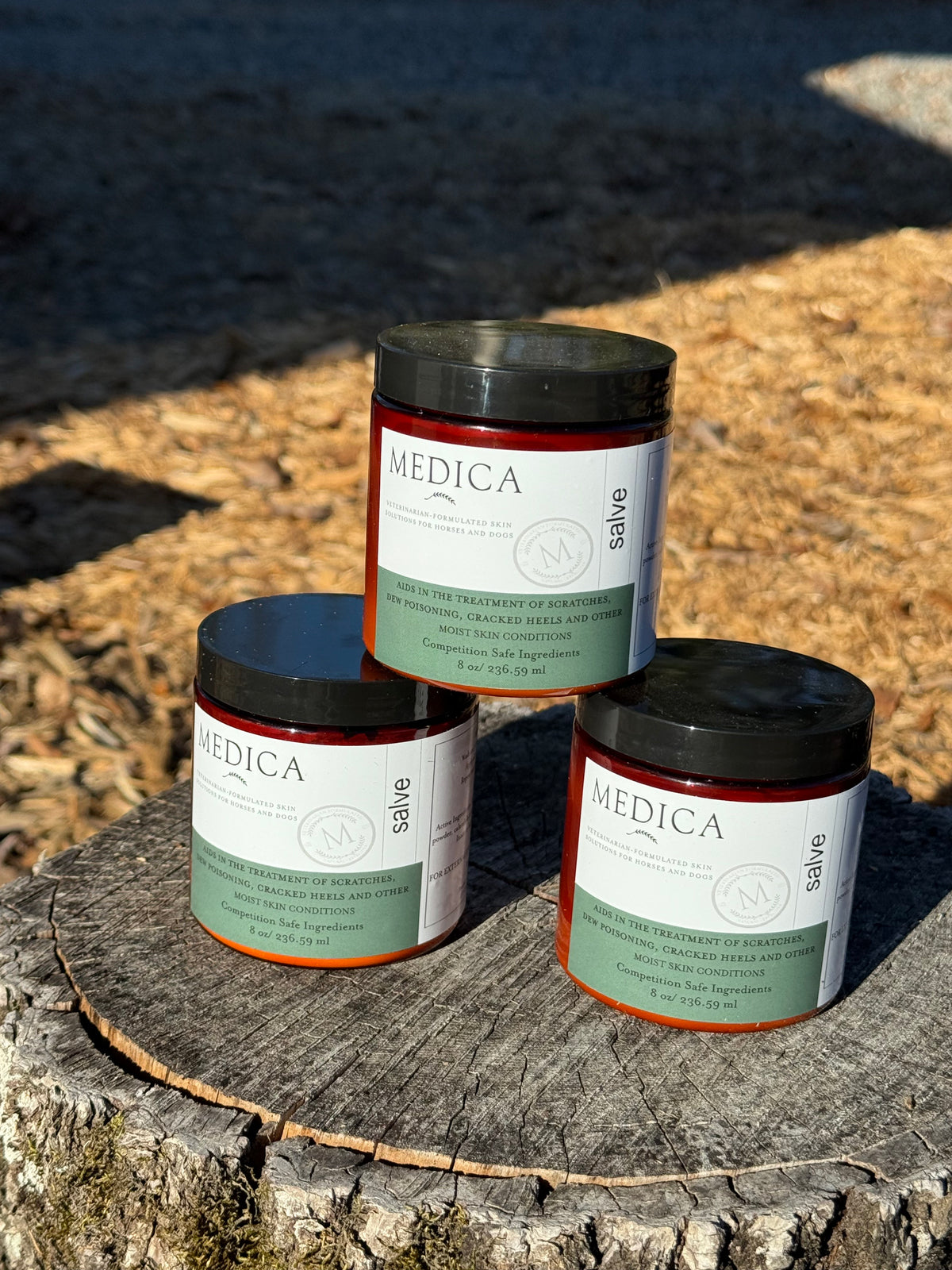
Where Medica Healing Salve fits in the sweet itch routine
Medica Healing Salve is useful because sweet itch is not just a cosmetic hair-loss problem. It is rubbed, irritated skin that needs help staying calm and protected.
The salve brings together:
- Zinc oxide for a physical barrier over vulnerable skin.
- Calendula-infused olive oil to help soothe irritated areas.
- Sulfur powder in the formula, which Medica uses across its skin-care line for challenged skin.
- A thick leave-on texture that stays put on manes, tail heads, bellies, and sensitive rubbed areas.
That makes it a natural match for sweet itch, tail rubbing, fly-bite irritation, and raw summer skin. It is especially helpful when you need something that can live in the barn aisle and be applied quickly: no bathing, no scrubbing, no rinse-out step.
How often should you apply it?
Start with clean hands and apply a generous layer directly to the affected areas. For an active flare, check the skin daily and reapply as needed to keep the area covered and comfortable. If the horse is sweating heavily, turned out in weather, or still rubbing, you may need to reapply more often.
Use your eyes and hands. If the skin looks exposed, dry, cracked, or the salve has rubbed off, refresh the layer. If the area looks increasingly painful, swollen, hot, wet, or infected, call your veterinarian.
What not to do
Sweet itch gets worse when the skin is already inflamed and we keep adding irritation. A few common mistakes can slow the turnaround.
- Do not aggressively pick crusts or scrub raw areas.
- Do not keep switching products every day before the skin has a chance to settle.
- Do not ignore the environment if the horse is under heavy gnat pressure.
- Do not wait until the mane or tail is destroyed if this happens every year.
- Do not assume every itchy horse has sweet itch. Pattern matters, and a vet can help when the presentation is unclear.
When to call your vet
Call your veterinarian if the skin is rapidly worsening, infected-looking, painful, swollen, bleeding, draining, or not improving with basic management. Also call if this is the first time your horse has had a serious itch episode, if multiple horses are affected, or if you suspect mites, hives, ringworm, rain rot, scratches, or another condition.
For severe sweet itch horses, your vet may recommend additional allergy management, prescription medication, or a more aggressive insect-control plan. Medica Healing Salve can be part of the surface-care routine, but it is not a substitute for veterinary care when the case is severe or complicated.
The bottom line
Sweet itch is not just a bug problem. It is a bug-triggered skin reaction that can become a rub cycle: bite, itch, rub, raw skin, more itch.
The most useful plan is simple:
- Reduce the insects.
- Soothe and protect the skin.
- Stay ahead of the repeat spots all season.
If your horse is rubbing the mane, belly, or tail head, start with Medica Healing Salve. For horses that deal with sweet itch all summer, the Sweet Itch Season Pack is the better barn-shelf option: three jars ready before the next flare starts.
Shop Medica Healing Salve
Stock up with the Sweet Itch Season Pack
